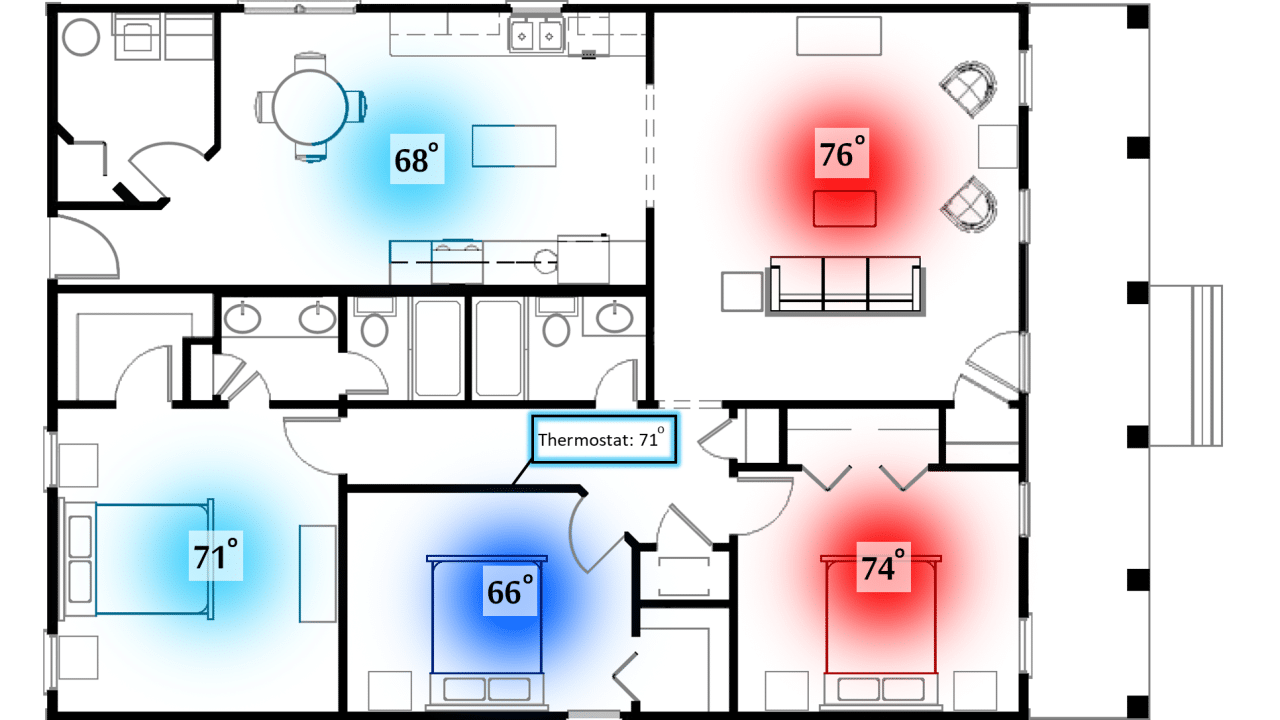
New homes typically have well-balanced air. During the planning phase, we use many measurements on a new house plan to engineer the best HVAC setup for each home. We even plan vent locations based on where the toilets and showers are installed to minimize drafts in those rooms.
However, as the house ages, you may notice that one side of your home has become noticeably colder or hotter than the other. This could mean that your home’s air balance has gone off-kilter.
A home’s air balance can be disrupted by any combination of several factors. A small animal can get into the attic and have a snow day in your insulation. An Oklahoma storm can send a branch through your window, and you replace it with better/stronger glass. You may have increased your home’s living space with an addition or remodel. Even changing the way a room is used can change the amount of air needed in that room.
Life happens and homes change. Because of this, the measurements used to build your HVAC system may become obsolete. Small differences in temperature are normal, but large temperature differences when interior doors are open can be problematic. It might be time to call us to come by to recalibrate or repair your system.

If you can tell that two rooms are distinctly different temperatures or more than 4 degrees off from the temperature at the thermostat, it’s time to make a call to see if you might need an air balance. It’s also possible that your system just needs a part replaced or repaired.
One of the first thing we’ll do is discuss which rooms are warmer and which are colder. There are two main symptoms to watch for when it’s a balancing issue: some vents receive too much air and other vents receive too little, even with the vent fully open. If you hear something rattling around in the vent, it could be a different issue, like damaged ductwork.
For the confident DIYer, you can attempt to balance the air yourself, as long as no repairs are needed. You do this by moving the small metal levers on your vents. This will open and close the grille “dampers” on your vents, adjusting the air flow. This adjustment can redirect the air pressure away from one room and towards another.
We do similar balancing but have specialized tools to accurately measure air flow, electricity usage, and more. We also typically try to balance from system dampers installed at your supply plenum. Successfully balancing the air may also require us to make adjustments while measuring the airflow. Remember that temperature swings are normal as the seasons change.

Ultimately, an air balance adjustment is one of the more simple yet impactful steps you can take to restore comfort and efficiency to your home. A properly balanced system ensures that every room receives the right amount of conditioned air, eliminating hot and cold spots while reducing strain on your HVAC equipment and lowering your utility bill.
In an ideally temperature-balanced home, you should be able to walk from the living room to the bedroom and feel little to no noticeable difference in comfort. You should experience consistent airflow and steady temperatures.
By investing in an Integrated Heat & Air comfort balance, you’re not just fixing uneven temperatures. You’re creating a healthier, more efficient, and more comfortable environment for everyone in your home.